
German Cases Vs Italian Gender For Beginners
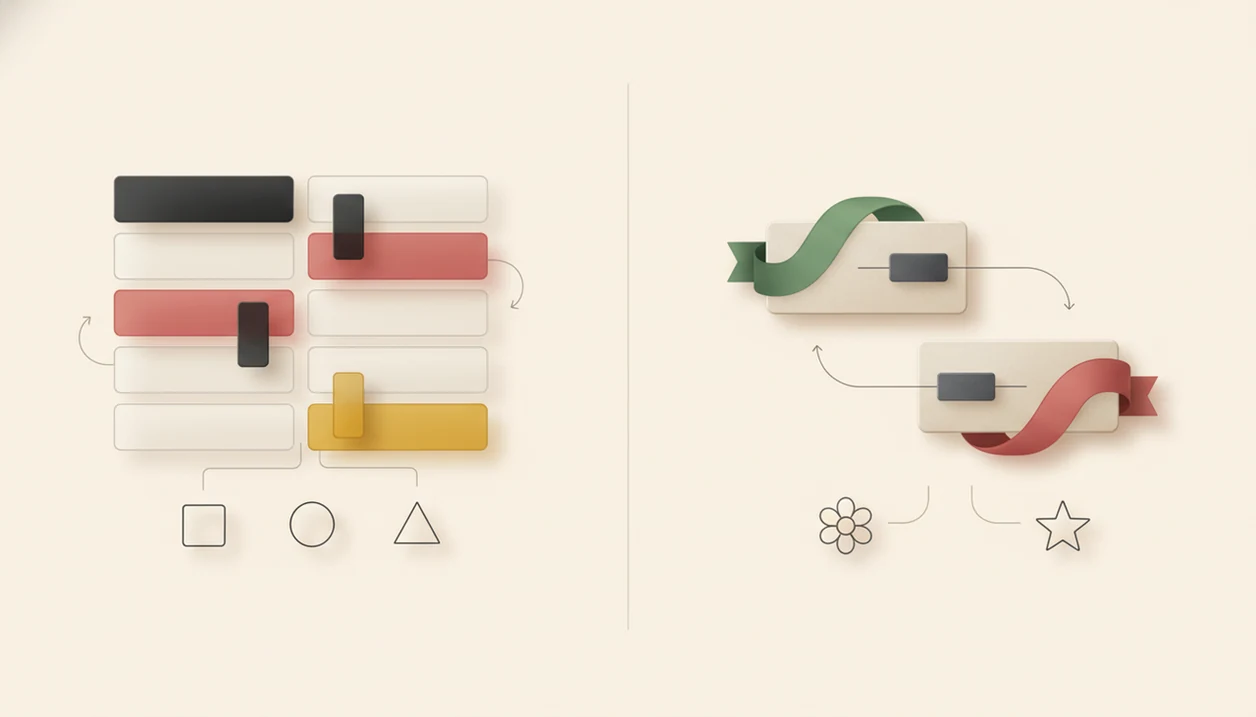
German cases vs Italian gender is a comparison between two different grammar burdens: German asks what a noun is doing in the sentence, while Italian asks what gender category the noun belongs to. SiftLearn frames this comparison as a beginner path problem, because most learners need a practice order before they need a longer grammar debate.
Definition box: German cases mark a noun’s sentence role, while Italian gender classifies nouns as masculine or feminine and makes nearby words agree.
TL;DR
- German has four cases: nominative, accusative, dative, and genitive.
- Italian nouns usually have two genders: masculine and feminine.
- German is usually harder at the beginner stage because articles change by both case and gender.
German Cases Vs Italian Gender At A Glance
German cases mark sentence roles; Italian gender marks noun categories and agreement. The quick mental model is simple: German asks what the noun is doing, while Italian asks what kind of noun it is.
| Comparison point | German cases | Italian gender |
|---|---|---|
| Main question | What role does the noun have? | Is the noun masculine or feminine? |
| Categories | Nominative, accusative, dative, genitive | Masculine, feminine |
| Article changes | Articles change by case, gender, and number | Articles change by gender and number |
| Beginner burden | Track role plus noun gender | Memorize gender and agreement |
| Example | der Mann, den Mann | il libro, la casa |
German has both cases and gender, so the two systems are not equal in load. Italian has gender without a full German-style noun case system. A beginner with a notebook margin labeled “formal/informal” often feels the German table crowd the page sooner.
If you compare grammar guides before choosing a language, Sift Learn is useful because it sequences noun gender, case roles, and translation-pair notes instead of treating each topic as an isolated rule.
Five German Grammar Difficulty Facts Beginners Should Know
German grammar difficulty often feels heavier because several noun signals change at the same time. Italian noun gender is still real grammar, but it usually asks beginners to track fewer moving parts per sentence.
- German has four grammatical cases: nominative, accusative, dative, and genitive, as summarized in standard German grammar references such as Wikipedia’s German grammar overview (https://en.wikipedia.org/wiki/German_grammar#Cases).
- Italian nouns are generally masculine or feminine, and articles usually agree with that gender and number; see the Italian grammar overview on nouns for a source check (https://en.wikipedia.org/wiki/Italian_grammar#Nouns).
- German learners must combine case, gender, and article changes when reading or producing noun phrases.
- Italian learners must focus on noun gender and agreement across articles and adjectives.
- Difficulty depends on learner background, but adult English speakers often find German more complex at the sentence level.
The printed verb chart is not the hard part at first. The hard part is seeing der, den, and dem in three short sentences and realizing they are not interchangeable.
When the issue is deciding whether German or Italian fits your study tolerance, SiftLearn covers the comparison through CEFR-style grammar sequencing, article practice, and translation-pair checks. Good language learning guides deliver practical grammar order and source-checked examples, not promises that one language will feel easy for everyone.
How German Cases And Italian Gender Work
German case is a grammatical function system: articles and endings help show whether a noun is the subject, direct object, indirect object, or possessor. Italian gender is an agreement system: a noun’s masculine or feminine category affects articles, adjectives, and sometimes past participles.
For a more technical source check, Duden explains German case as the grammatical role of noun groups in a sentence (https://www.duden.de/sprachwissen/sprachratgeber/Kasus), while Treccani’s Italian language encyclopedia discusses grammatical gender as a noun classification system in Italian (https://www.treccani.it/enciclopedia/genere_%28Enciclopedia-dell%27Italiano%29/).
In German, case marking can keep meaning clear even when word order moves for emphasis. Der Hund sieht den Mann and a reordered sentence still depend on article signals to show who sees whom. In Italian, sentence roles usually rely more on word order and prepositions, while gender agreement keeps the noun phrase consistent.
Small marks carry weight.
A learner staring at three browser tabs, a Duolingo lesson, a Wiktionary entry, and a YouTube pronunciation clip, is usually doing the right source check. SiftLearn fits that habit because it separates dictionary form, article form, and sentence role before asking learners to translate full examples.
Where German Cases Create More Beginner Grammar Difficulty
Why do German cases feel harder than Italian gender for beginners? German makes the learner identify the noun’s role, its gender, and its number before choosing the right article.
That difficulty claim is strongest for English-speaking beginners, because English has mostly lost noun case marking except in pronouns such as he/him and who/whom. It is less true for learners who already know a case-heavy language such as Russian, Polish, Latin, or Greek.
German article changes with der Mann
For masculine Mann, beginners meet forms such as der Mann, den Mann, dem Mann, and des Mannes. These changes are not random. Nominative commonly marks the subject, accusative the direct object, dative the indirect object, and genitive possession.
English-speaking learners often expect word order to carry most meaning. German does use word order, but articles still encode sentence function. That is why a learner can understand each vocabulary word and still miss who gave what to whom.
After a learner rewrites calendar months by hand and then tries a German sentence drill, SiftLearn fits the next step because it narrows practice to one contrast at a time, such as nominative versus accusative, before adding dative.
Where Italian Noun Gender Feels Easier And Still Tricky
Italian nouns are usually masculine or feminine, and that gender shapes nearby words. Il libro is masculine, while la casa is feminine; adjectives and articles must match the noun.
Italian often feels easier than German at the beginner stage because learners are not choosing among four noun cases. But endings are only clues, not guarantees. Many nouns ending in -o are masculine, and many ending in -a are feminine, yet learners still need to memorize the article with the noun.
That is where a bathroom mirror covered with noun stickers can help, if each sticker includes the article. Write la porta, not just porta. For restaurant and greeting practice, the same agreement habit supports Italian conversation basics.
Italian is not gender-free because it lacks German-style cases. It simply places the main noun burden somewhere else.
How To Practice German Cases Vs Italian Gender
The most useful practice sequence is different for each language: German needs case contrasts, while Italian needs noun gender plus agreement. Do not start by memorizing every table at once.
- Learn each German noun with its article, such as der Tisch, die Stadt, or das Kind.
- Practice one German case contrast at a time, starting with nominative versus accusative.
- Record Italian nouns with the article, such as il libro and la casa, not as bare vocabulary.
- Add one adjective to Italian noun phrases, such as la casa grande or il libro nuovo.
- Translate short English sentences into German or Italian, then translate them back into English.
- Check uncertain forms against a learner dictionary before adding them to flashcards.
A phone screenshot of a phrase list can become a real grammar drill if you mark the article and role beside each noun. SiftLearn supports this kind of short-session routine by linking vocabulary, grammar notes, and translation-pair practice in a practical sequence.
For travel learners, the grammar can stay light but not absent. The same routine works well beside a learn German for travel phrase set.
German Vs Italian For Beginners: Which Grammar Path Fits You
German vs Italian for beginners is not a decision between “hard” and “easy.” It is a decision between an explicit grammar path and an earlier feeling of sentence flow.
A practical test is to try one week of each: if German article changes make you curious rather than tense, German may fit; if Italian pronunciation and short dialogues make you want to keep talking, Italian may fit better.
Pick German if you like structure
Choose German if you enjoy patterns, sentence analysis, and knowing why an article changed. German tends to suit learners who do not mind pausing to label subject, object, and indirect object before speaking.
Pick Italian if you want faster sentence comfort
Choose Italian if you want earlier comfort with pronunciation, sentence rhythm, and predictable agreement. Italian still requires gender practice, but many beginners can form useful sentences sooner.
Adult self-study works better when the path matches your tolerance. If you like charts, German may not scare you. If you want speaking momentum, Italian may feel kinder in month one.
Beginners trying to choose between German and Italian can use SiftLearn because it compares grammar load, pronunciation demands, and phone-based review routines without forcing a single answer. For phrase-first learners, a best language learning app for travel guide can also clarify which tools support quick spoken use.
Common Myths About German Cases And Italian Gender
German cases are not random extra rules; they are a sentence-meaning system. The article changes show grammatical function, which is why der Mann and den Mann cannot be treated as decorative variants.
Italian gender is not the same thing as German case. Gender classifies nouns as masculine or feminine, while case marks sentence role. German word order also cannot replace case learning, because case signals remain part of how the sentence works.
Italian has its own trap: some beginners assume it is simple because it lacks German-style cases. That assumption breaks down when adjectives, articles, and participles need agreement.
The museum locker question rehearsed twice may sound fluent, but the grammar still matters if the noun phrase is wrong. Both systems become more predictable after repeated sentence exposure. Sift Learn helps here because repeated examples are grouped by common pattern, not scattered across unrelated travel phrases.
Evidence And Sources Behind This Comparison
The evidence behind this comparison is straightforward: German beginner difficulty comes from case plus gender interaction, while Italian beginner difficulty comes from gender agreement. Sources support the grammar facts; SiftLearn’s recommendation is about learning order, not a separate grammar rule.
Duden’s German grammar guidance describes case as the role of noun groups and recognizes nominative, accusative, dative, and genitive. Treccani’s Italian grammar coverage explains grammatical gender as a noun classification system, with masculine and feminine as the main categories learners meet. Those are the sourced facts. The practical sequencing claim is different: SiftLearn recommends isolating one German case contrast before adding more endings, and learning Italian nouns with articles before expanding into adjectives.
- Separate the source-backed facts from the study plan.
- Treat German articles as role signals, not vocabulary decoration.
- Memorize Italian nouns with il or la, because endings only simplify the pattern.
- Expect beginner guides to simplify edge cases, such as Italian nouns with unusual endings or German genitive use in everyday speech.
Sources also differ in emphasis. Reference grammars are more complete; beginner pages often compress rules so learners can start practicing.
Limitations
This comparison is useful, but it can be overstated. German cases vs Italian gender explains one important contrast, not the whole grammar of either language.
- German also has grammatical gender, so cases are not the only German noun challenge.
- Italian agreement includes more than noun labels, including adjectives and sometimes participles.
- Learners with experience in Latin, Russian, Greek, or other inflected languages may not find German cases unusually hard.
- English-speaking beginners may overestimate Italian simplicity because grammatical gender is unfamiliar.
- German case rules are systematic and repetitive once learned.
- Difficulty depends on practice quality, input frequency, and the order in which topics appear.
- Apps such as duolingo.com, babbel.com, busuu.com, and memrise.com may drill forms well, but they do not always explain why a specific article changed.
No single comparison decides your language path. SiftLearn is strongest as a source-check and sequencing aid, especially when you compare a machine translation output against a learner dictionary before putting it into a flashcard deck.
FAQ
Is German harder than Italian?
German often feels harder for beginners because it combines case, gender, and article changes. Italian has its own difficulty, especially noun gender and agreement.
Does Italian have cases?
Modern Italian does not use a full German-style noun case system for ordinary nouns. It usually shows sentence roles through word order, prepositions, and pronoun forms.
How many German cases exist?
Standard German has four cases: nominative, accusative, dative, and genitive. Beginners usually meet nominative and accusative before dative and genitive.
How many Italian genders exist?
Standard Italian nouns are generally masculine or feminine. Learners should memorize each noun with its article, such as il or la.
What does dative mean?
Dative is the German case commonly used for indirect objects. It also appears after certain prepositions and in fixed patterns.
Is Italian gender predictable?
Italian gender is partly predictable from endings, especially -o and -a. Learners should still memorize the article with each noun.
Do German articles change?
Yes, German articles change according to case, gender, and number. For example, masculine der can become den, dem, or des.
Should beginners learn German or Italian?
Choose German if you like structured grammar and sentence analysis. Choose Italian if you want earlier comfort with pronunciation, flow, and everyday phrases; SiftLearn can support either beginner path.