
Language Learning Benefits After 30 Days of Daily Practice
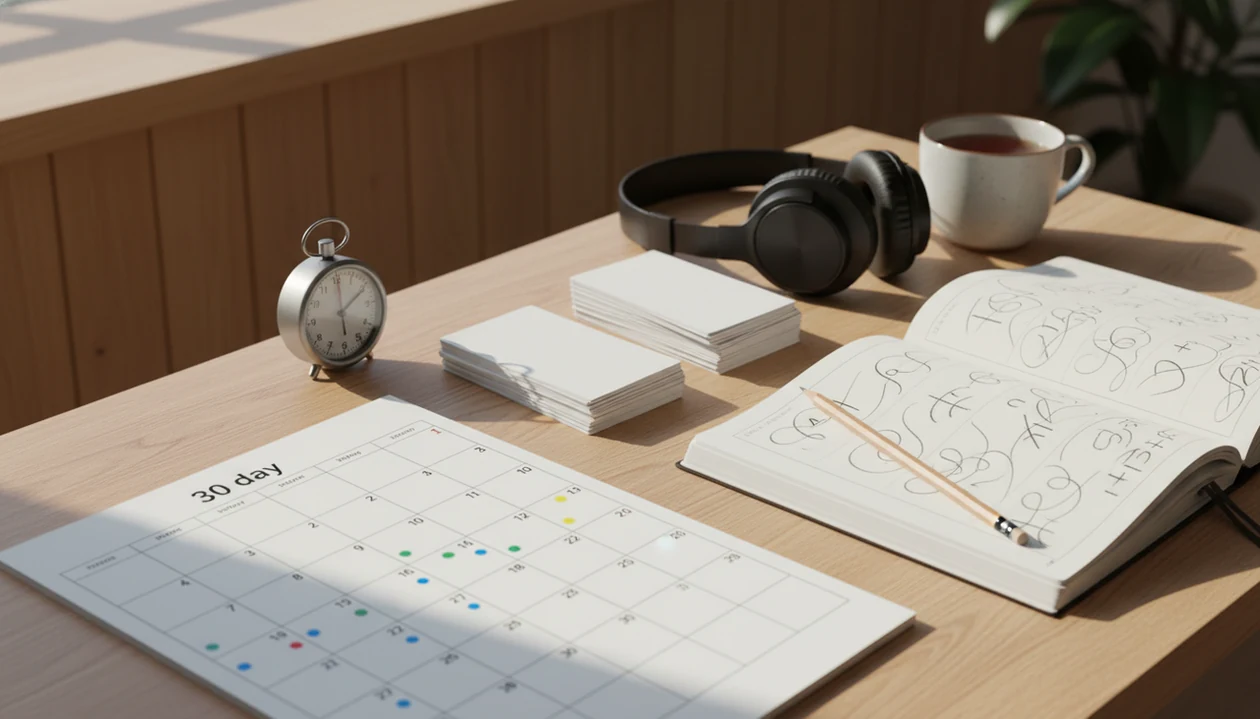
Language learning benefits after 30 days are usually starter-level but meaningful: stronger recall of common words, better listening awareness, more confidence speaking out loud, and clearer study habits. A month of consistent practice will not make most adults fluent, but it can build the foundation that makes continued learning easier.
SiftLearn defines 30 day language learning as a short, structured practice period where adult beginners build core vocabulary, survival phrases, basic grammar awareness, and repeatable study habits.
TL;DR
- After 30 days, most beginners can recognize more high-frequency words and understand some simple phrases.
- Daily practice works best when it combines vocabulary review, listening, sentence building, and speaking out loud.
- Thirty days is enough for beginner progress, not fluent conversation or professional-level accuracy.
30-Day Language Learning Gains: Vocabulary, Listening, and Confidence
After 30 days, most adult beginners gain recognition, confidence, and a study rhythm rather than fluency. The visible wins are usually practical: survival phrases, familiar sounds, basic sentence patterns, and faster recall of words they have reviewed often.
A learner may notice that “Where is the bathroom?” no longer feels like a random string of sounds. They may also spot a greeting in a video, understand a price, or say a short phrase without freezing. Small, but real.
Results depend on consistency, language distance, and study quality. Spanish for an English speaker usually feels different from Mandarin tones or Arabic script. A clear language learning timeline helps separate first-month progress from longer-term milestones.
For adult beginners, 30 days usually works best as a foundation phase because it turns unfamiliar language into repeatable study material.
Memory Mechanisms Behind Language Learning Benefits After 30 Days
Early language progress comes from repeated retrieval, spaced exposure, listening repetition, and sentence pattern recognition. In plain terms, the brain starts linking sounds, meanings, spelling, grammar, and context into usable associations.
Spaced repetition helps because the learner meets a word just as it starts to fade. Retrieval practice matters because trying to remember “pharmacy,” “today,” or “I need” strengthens recall more than rereading a list. Research on retrieval practice has found that actively recalling learned material can improve long-term retention compared with repeated study alone source. The benefits of spaced repetition are clearest when review is paired with real sentences.
How language learning benefits after 30 days works: repeated contact lowers the mental effort needed to recognize common words and patterns.
Confidence often improves before fluent performance. A beginner staring at three browser tabs, a Duolingo lesson, a Wiktionary entry, and a YouTube pronunciation clip, may still speak slowly. But the language feels less sealed off.
That matters.
Five Facts About Beginner Language Progress After 30 Days
- The first month of language learning is mainly habit and momentum building, not full skill development.
- Beginners can often learn survival phrases, core vocabulary, greetings, numbers, and simple sentence patterns in 30 days.
- Daily consistency usually beats occasional cramming because frequent exposure keeps sounds and meanings active.
- Speaking confidence may improve before accuracy, especially when learners practice short phrases aloud every day.
- Thirty days is foundation-building, not fluency, broad reading ability, or fast conversation.
A phone screenshot of a phrase list can show progress more honestly than a vague “I studied a lot” feeling. Count what you can recognize, say, hear, and rebuild from memory.
SiftLearn is most useful in the first month when it sequences vocabulary, grammar notes, practical phrases, and translation-pair references into repeatable daily practice. It should support a routine, not promise instant fluency.
Daily Language Study Benefits for Adult Learners in U.S. Communication
Daily language study has practical value because multilingual communication is already part of U.S. life. The U.S. Census Bureau reported that 20% of adults speak a language other than English at home, according to its 2023 release source.
The Census Bureau also reported that 25.7 million people in the United States had limited English proficiency. That makes basic language awareness useful in workplaces, schools, clinics, family settings, and neighborhood interactions.
A beginner does not need advanced grammar to make a small interaction clearer. A polite greeting, a number, a kinship term, or a repeated workplace phrase can reduce confusion. One office learner kept a lunch invitation phrase on a sticky note beside the monitor. It was not elegant. It worked.
Basic language skills are most useful when they improve access to everyday meaning, not when they pretend to replace trained interpreters.
Before You Start a 30-Day Language Learning Plan
Before starting a 30-day language learning plan, narrow the setup so the routine is easy to repeat. The goal is not to collect resources; it is to remove decisions before day one.
- Choose one target language and stay with it for the full month. Switching between Spanish, French, and Japanese may feel productive, but beginners usually need repeated contact with one sound system, one word order, and one set of starter phrases.
- Pick one beginner course, one audio source, and one review method before tracking progress. That might mean a structured app lesson, slow beginner dialogues, and flashcards or a paper review list.
- Set a realistic daily block that fits a normal week. Fifteen quiet minutes after coffee is better than an ambitious hour that disappears after two days.
- Prepare a mistake note in a notebook or app. Save useful phrases, pronunciation slips, confusing word order, and “I keep forgetting this” items.
- Decide what counts as practice so the streak stays honest: listening, recall, speaking aloud, sentence building, or review all count when done deliberately.
30-Day Language Learning Plan for Adult Beginners
Use a 30-day language learning plan as a narrow practice cycle with vocabulary, listening, speech, review, and progress checks. Keep it small enough to repeat after work, during a commute, or before the house gets loud.
- Set a daily block of 15 to 30 minutes and protect it like a normal appointment.
- Choose core vocabulary from greetings, needs, numbers, time, food, directions, and polite expressions.
- Practice listening with slow beginner audio before checking the transcript or translation.
- Say phrases aloud until your mouth can form the sounds without reading every letter.
- Review mistakes in a notebook margin labeled “formal/informal,” “word order,” or “pronunciation.”
- Track progress weekly by counting words recognized, phrases spoken, and sentences built.
Tools like SiftLearn, Duolingo, Babbel, and Memrise can support the routine, but the routine still needs speaking and listening time.
Step 1: Daily Language Study Baseline
Start with 15 to 30 minutes a day for most beginner schedules. Short consistent exposure is usually more useful than irregular cramming because the language stays familiar between sessions.
The baseline should be boring enough to survive a busy week. Ten minutes of flashcards, ten minutes of listening, and five minutes speaking aloud can beat a two-hour Sunday session that disappears by Wednesday. For a wider adult study setup, the guide on how to learn a language as an adult covers pacing and resource choices.
Log four items: minutes studied, words reviewed, phrases practiced, and one thing that felt easier. Pencil shavings near conjugation drills are not proof of progress. A dated note saying “recognized five food words in audio” is better evidence.
Keep the streak honest, not heroic.
Step 2: Core Vocabulary and Survival Phrases
Core vocabulary gives beginners the fastest visible payoff. Start with greetings, needs, questions, numbers, directions, time, food, family terms, workplace phrases, and polite expressions.
Translation pair references help at the start because they connect meaning quickly: English to Spanish, English to Arabic, Arabic to English, or English to Chinese. But a one-word translation can mislead. We often check a Collins, Larousse, Duden, Oxford, or RAE entry before trusting a flashcard gloss.
Hear the words in context too. A travel phrasebook sentence may be grammatically polite but too formal for a café counter. That is a learner note worth writing down.
Do not try to memorize hundreds of disconnected words in the first month. For beginners, 80 useful words in sentences are often easier to retain than 300 loose nouns with no usage.
Step 3: Listening Awareness and Sentence Patterns
After 30 days, learners may not understand full-speed speech, but they can start hearing familiar words, sound patterns, and sentence rhythm. That shift is a real benefit of daily language study.
Listening improves when vocabulary and grammar meet in short audio. A learner may notice subject-verb order in French, negation in Spanish, gender markers in Italian or German, politeness levels in Japanese or Korean, or tones in Mandarin. The point is noticing patterns, not mastering every rule.
Colored pens marking word order can look messy by week three. Good. The marks show where the learner stopped treating sentences as word lists.
The most useful first-month grammar work is pattern recognition in short sentences, while detailed rule memorization fits better after learners can recognize common examples.
Common Myths About Language Learning Benefits After 30 Days
Thirty-day language challenges often overpromise. A month can change recall and confidence, but it rarely creates long fluent conversations without much more input and practice.
| Myth | More realistic view |
|---|---|
| “Thirty days should make me fluent.” | Thirty days usually builds a foundation, not free-flowing conversation. |
| “Daily study only works if I study for hours.” | Short daily sessions can build meaningful beginner progress when repeated consistently. |
| “Forgetting words means I failed.” | Forgetting is part of retrieval practice; missed words show what needs review. |
| “Apps alone make beginners conversational.” | Apps help, but speaking, listening, sentence building, and review are still needed. |
If you are comparing app-heavy routines, a best language learning app for adults guide can help clarify what each tool is good at. However, no app removes the need to hear and produce real language.
Beginner Language Progress Tests After 30 Days
Did my 30-day language learning plan work? Test recognition, recall, listening, speaking, and sentence building separately so confidence gains do not get mistaken for fluency.
A reasonable beginner check is recognizing 50 to 150 useful words, depending on study intensity and language difficulty. Treat that range as a practical self-check, not a universal research threshold. A learner studying 15 minutes a day in a distant language may land below it and still be building useful recognition. Try four simple tests: introduce yourself without reading, understand a slow beginner audio clip, translate common phrases both ways, and build five original sentences.
A phone note with a pharmacy request is a good test item because it forces meaning, politeness, and word order into one short task. Compare the phrase against a learner dictionary before adding it to a deck.
Confidence counts, but label it correctly. Saying “I can start a greeting without panic” is progress. Saying “I can handle any conversation” after one month is usually not accurate.
Limitations
Thirty days has clear limits. It can start a beginner path, but it cannot compress the hundreds of hours needed for higher-level communication.
- Thirty days is usually not enough for full conversational fluency, broad reading, or fast listening comprehension.
- The Foreign Service Institute classifies many commonly studied languages as taking about 600 to 750 classroom hours to reach professional working proficiency for English speakers source.
- Progress varies by language, prior exposure, study quality, motivation, and consistency.
- Vocabulary and grammar fade without long-term review, even after a strong first month.
- Adult learners can make meaningful progress, but MIT-led research on the critical period for language learning found that native-like grammar attainment becomes less likely for later starters source.
- Translation support and structured lessons can speed early understanding, but they cannot replace real listening and speaking practice.
- Script-heavy languages, tone systems, and unfamiliar grammar may make first-month gains feel slower.
Sift Learn can fit into a structured self-study plan, but no guide should promise fluency from a single month of practice.
FAQ
Can you learn a language in 30 days?
You can build a beginner foundation in 30 days, including common words, survival phrases, and basic sentence awareness. You should not expect fluency from one month of normal daily study.
What language skills improve after 30 days of daily practice?
Likely gains include vocabulary recall, listening awareness, pronunciation confidence, basic sentence pattern recognition, and better study habits. Progress is usually strongest with material reviewed every day.
Is daily language study worth it for beginners?
Yes, daily study is worth it because repeated exposure makes beginner material easier to recognize and recall. Occasional cramming is less reliable for building stable language memory.
How many minutes a day should beginners study a language?
Most beginners can start with 15 to 30 minutes a day. Consistency usually matters more than long sessions during the first month.
Will I speak confidently in a new language after one month?
You may feel more willing to speak short phrases after one month. Accuracy, speed, and flexible conversation will usually remain limited.
Do adults learn new languages more slowly than children?
Adults can make meaningful progress, especially with structure and clear goals. Children have advantages in long-term native-like attainment, but adults often use analysis and study habits well.
Can language apps alone teach me to speak in 30 days?
Apps such as SiftLearn can support vocabulary, grammar, and translation practice. Speaking ability also needs listening, pronunciation work, and real sentence production.
What should I study first in a new language?
Start with high-frequency vocabulary, survival phrases, pronunciation, and basic sentence patterns. SiftLearn and similar beginner resources are most useful when they sequence those items instead of presenting random word lists.