
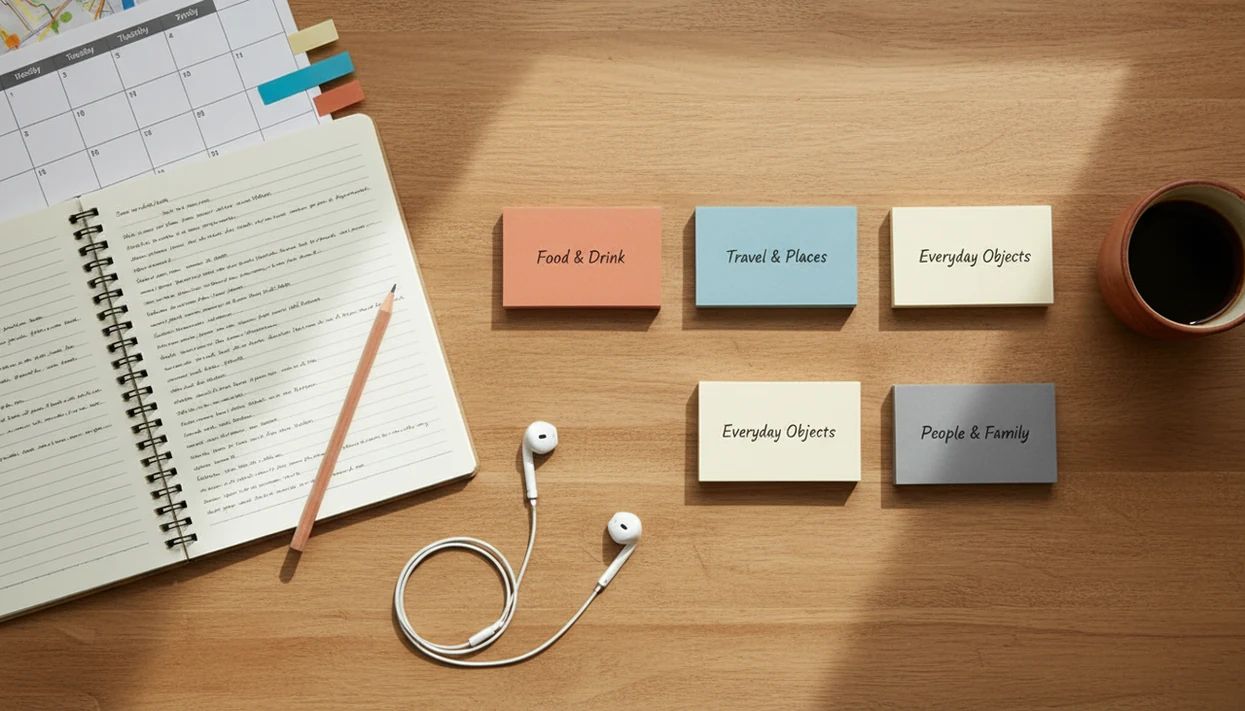
Definition: Learning Spanish means building the ability to understand, speak, read, and write in Spanish through structured study of vocabulary, grammar, and practical phrases so you can communicate in real-life situations.
Spanish At a Glance: 5 Facts Every Beginner Must Know
- Spanish has about 486 million native speakers and more than 595 million total speakers worldwide, according to the Instituto Cervantes 2022 report source.
- The U.S. Foreign Service Institute classifies Spanish as a Category I language for English speakers, with an estimate of 600–750 classroom hours to professional working proficiency source.
- A beginner who learns 1,000–2,000 high-frequency words can understand much of everyday conversation, especially greetings, food, travel, work, numbers, time, and family.
- Short daily study sessions usually beat weekend cramming because active recall fades quickly without repeated retrieval.
- Adults can reach high Spanish proficiency, but they need a practical sequence, not scattered word lists and random videos.
The first notebook page often looks simple: hola, gracias, agua, trabajo. That is normal. Build from there.
Adult Spanish Acquisition: Input, Recall, and Speaking Practice
How Spanish learning works: adults acquire usable Spanish by combining comprehensible input, active recall, and output. Comprehensible input means Spanish you mostly understand, often around 80%, so your brain can infer new words without drowning in noise.
Vocabulary sticks better when you retrieve it, not when you reread it. Spaced repetition and active recall ask you to pull la mesa or necesito from memory before the answer appears. That tiny struggle matters. For the retrieval-practice effect behind active recall, see the APA summary of testing-enhanced learning: https://www.apa.org/science/about/psa/2016/06/learning-memory. A learner staring at three browser tabs, a Duolingo lesson, a Wiktionary entry, and a YouTube pronunciation clip, is doing a source check, not wasting time.
Frequency-based sequencing also helps. Learn quiero, tengo, puedo, voy, and necesito before rare nouns, because those verbs unlock many short sentences. For adult beginners, high-frequency vocabulary plus basic sentence patterns is often more useful than isolated grammar study because it creates usable phrases sooner.
Speaking and writing turn passive knowledge into active skill. You may recognize ¿Dónde está...? for weeks before you can say it under pressure. Output exposes that gap fast.
How to Learn Spanish: A 6-Step Beginner Study Plan
Use this plan as a practical sequence for how to learn Spanish from zero. It pairs vocabulary, grammar, listening, and speaking so one skill does not sit unused.
- Set a realistic goal and timeline using the FSI 600–750 hour estimate as a long-range reference.
- Build a 500-word core vocabulary base with topic lists and Spanish–English translation pairs.
- Learn 10 essential grammar patterns, including present tense, ser vs estar, gender, and articles.
- Add 15–30 minutes of daily comprehensible listening at beginner speed.
- Start speaking in short exchanges through tutors, language exchanges, or shadowing.
- Review weekly with spaced repetition and track words learned, missed, and used aloud.
Keep the plan simple: choose one weekly goal, practice a small vocabulary set, listen daily, speak before you feel ready, and reset weak flashcards every Sunday.
Spanish Vocabulary Guide: Words to Learn First by Topic
A Spanish vocabulary guide should start with high-frequency, high-use topics. Aim for about 1,000 words for basic conversation, then 3,000–5,000 words for broader everyday fluency. For frequency-based word selection, cross-check beginner lists against corpus-backed references such as CORPES XXI from the Real Academia Española: https://www.rae.es/banco-de-datos/corpes-xxi.
How Many Spanish Words You Need at Each Level
The first 500 words should cover survival phrases and sentence-building verbs. Around 1,000–2,000 words, many learners can handle predictable conversations. At 3,000–5,000 words, reading, podcasts, and casual talk become less stop-start, though grammar still matters.
Good language learning guides help adults learn vocabulary, grammar, and practical phrases across popular languages with structured lessons and translation pair references, not vague promises of instant fluency.
Priority Topic Categories for Adult Learners
Start with greetings, food, travel, work, numbers, time, and family. Use translation pairs such as la cuenta, the bill; mañana, tomorrow; trabajo, work; mi hermana, my sister. Grocery labels matched to notebook words make food vocabulary less abstract.
Move from passive recognition to active recall by covering the English side first, then saying the Spanish aloud. For comparing phone-based tools, our best language learning app for adults guide separates vocabulary drills from speaking practice.
Essential Spanish Grammar for Beginners
Beginner Spanish grammar should help you form real sentences quickly. Start with noun gender and articles: el libro, la mesa, un café, una pregunta. The pattern is not always obvious, so confirm new nouns in a learner dictionary before adding them to flashcards.
Next, learn present tense regular verbs. Hablar, comer, and vivir show the basic -ar, -er, and -ir patterns. Then add ser and estar. Soy estudiante describes identity; estoy cansado describes a state. That distinction takes time.
Basic Spanish word order is often subject-verb-object: Yo necesito ayuda. Spanish also drops subject pronouns when the verb ending is clear, so necesito ayuda is normal.
Grammar works better in phrases than in charts. A pronoun chart folded into a backpack can help, but it should support sentences, not replace them.
Common Myths About Learning Spanish for Beginners
Myth one: you must master grammar before speaking. In practice, speaking early with imperfect grammar builds faster usable fluency because it forces retrieval under pressure.
Myth two: Spanish TV without subtitles will make you fluent. Input needs to be mostly understandable. If you understand only scattered words, your brain mostly hears sound, not meaning.
Myth three: adults are too old to learn Spanish well. Adults learn differently from children, but motivation, prior literacy, and steady routines can take them far. The notebook margin labeled “formal/informal” is an adult advantage, not a weakness.
Myth four: memorizing long lists is enough. Durable learning requires spaced repetition, context, and active recall. For beginners, a structured lesson path plus real practice usually works better than random exposure because it turns recognition into use.
A structured language-learning path should make clear which lessons teach vocabulary, which teach grammar, and which push you into real speaking practice.
Spanish Listening and Conversation Practice for Self-Study Learners
Comprehensible input is Spanish you can follow without translating every word. Choose beginner podcasts, slow news, graded YouTube lessons, and course audio where you understand the main idea before replaying.
For listening, repeat short clips. A replayed audio clip at midnight may not look impressive, but it trains sound recognition. Use transcripts when available, then listen again without reading.
Conversation needs real response time. Language exchange platforms, online tutors, and small group classes help because they force you to answer, ask, pause, and repair mistakes. Apps such as Duolingo, Babbel, Busuu, Memrise, Rosetta Stone, and SiftLearn can build routine, but apps alone rarely produce strong speaking skills without live interaction.
Shadowing is useful too. Listen to one sentence, pause, and imitate rhythm, stress, and vowel clarity. Clapped syllables at the kitchen table feel odd. They work.
Spanish Apps, Tutors, and Self-Study: Which Should You Use?
Use apps for daily structure, tutors for live speaking pressure, and self-study resources for flexible input. Most beginners do best with a mix, because each method trains a different part of Spanish.
- Use apps when you need vocabulary drills, streaks, grammar reminders, and quick review on a bus, lunch break, or tired weeknight.
- Add tutors when pronunciation, live recall, or conversation speed becomes the problem. A tutor can hear the difference between pero and perro and make you answer before you have ten seconds to plan.
- Keep self-study resources in the rotation for free listening, reading, and topic review. Podcasts, graded videos, library books, and saved transcripts let you revisit food, travel, work, or family vocabulary without paying for every minute.
- Combine methods when you need both structure and pressure. For example, learn restaurant phrases in an app, listen to a slow dialogue, then practice ordering with a tutor or exchange partner.
- Review what failed after each conversation. Missed words and frozen pauses should become the next flashcard set, not a reason to start over.
Limitations
Spanish learning plans have limits, especially for self-study learners. Treat any “learn Spanish fast” promise with caution.
- Conversational fluency usually takes many months or years, not a few weekends.
- Apps and self-study courses rarely build strong speaking skills without real-time interaction.
- Random TV, scattered word lists, and unfocused exposure often lead to slow progress and forgetting.
- Structured guides cannot fully replicate cultural nuance, humor, slang, or informal native-speaker register.
- Individual results vary by prior language experience, daily time, motivation, and learning environment.
- Machine translations can be useful, but a Collins, Oxford, or RAE source check is safer before saving a phrase.
- Professional proficiency is a much higher target than travel survival Spanish.
For adults comparing tools before paying, the best language learning app for adults guide can help narrow what each method actually trains.