
How to Learn Mandarin With Phone Audio, Flashcards, and Daily Review
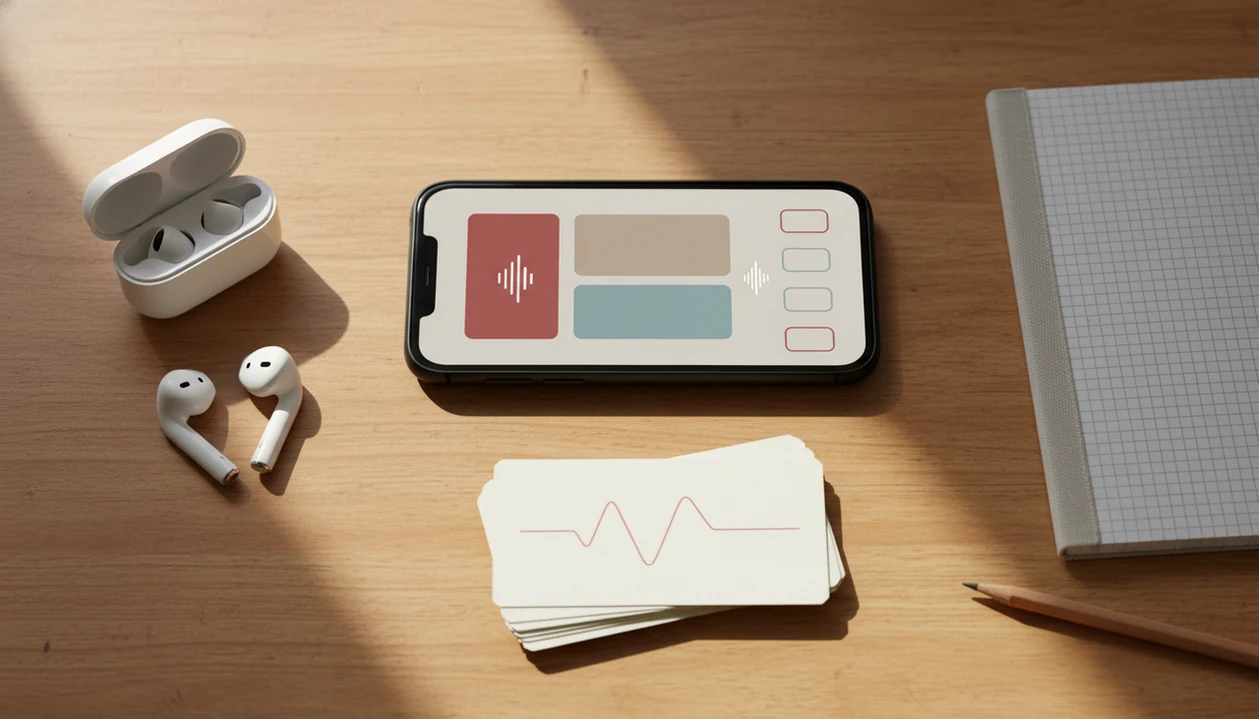
The best way for how to learn Mandarin with phone tools is to build a small system: one structured lesson app, one dictionary, one flashcard deck, and one source of real audio or reading. Use the phone for short daily sessions that connect pinyin, tones, characters, listening, speaking, and spaced review instead of depending on one app alone.
Definition: A mobile Mandarin routine is a phone-based study workflow that combines structured lessons, lookup tools, audio practice, flashcards, and real Chinese input into repeatable daily practice.
TL;DR
- Use your phone as a Mandarin study system, not as a single-app habit.
- Start with pinyin, tones, basic phrases, and audio before trying to memorize large character lists.
- Make flashcards, recordings, listening, and review part of the same daily loop.
<h2 id="at-a-glance-mobile-mandarin-routine">At-a-Glance Mobile Mandarin Routine</h2>
A good Mandarin on phone workflow needs four parts: structured lessons, dictionary lookup, flashcards, and real input. The lesson gives sequence, the dictionary checks meaning, the deck schedules review, and audio keeps pronunciation from becoming guesswork.
Keep the routine short. Most adults can manage 10 to 25 minutes if the phone is already in a coat pocket or beside a work laptop. Pew Research Center reports that 97% of U.S. adults own a cellphone, so phone-based study is practical for many learners, not just people with desk time: https://www.pewresearch.org/internet/fact-sheet/mobile/
A useful daily loop is simple: review cards, repeat audio, record one phrase, then read or hear one short dialogue. The pocket check is real.
<h2 id="how-learning-mandarin-with-phone-tools-works">How Learning Mandarin With Phone Tools Works</h2>
A mobile Mandarin routine works by connecting sound, meaning, script, and retrieval in the same study loop. Mandarin is not learned well as isolated English-to-Chinese labels; tones, pinyin, characters, and context need to reinforce one another.
The workflow is mechanical but effective. A lesson introduces 你好, the dictionary clarifies use and pronunciation, flashcards schedule retrieval, audio supplies a model, and input shows the phrase in a real exchange. That is spaced retrieval plus input exposure, in plain terms: you meet the item, recall it later, and see it used outside the lesson. Retrieval-practice research has found that actively recalling material improves later retention more than restudying alone: https://www.science.org/doi/10.1126/science.1152408
Phones support micro-practice because they make audio, notes, and review available in line at a pharmacy or during a bus ride. But they can also fragment learning. Mandarin has about 1.1 billion speakers, per U.S. Census reporting, but global scale does not make the beginner path shorter.
<h2 id="phone-requirements-before-you-start-mandarin">Phone Requirements Before You Start Mandarin on Phone</h2>
Before you start Mandarin on phone, set up the tools that match the jobs. A learner staring at three browser tabs, a Duolingo lesson, a Wiktionary entry, and a YouTube pronunciation clip, is already doing source-check work.
- Structured beginner app: choose one that teaches pinyin, tones, basic phrases, and lesson progression.
- Dictionary or translation tool: use it for lookup, not as your teacher. For translation-pair cautions, use a guide like translate English to Chinese for beginners.
- Flashcard app: pick one with spaced repetition, audio fields, characters, and pinyin.
- Phone setup: add headphones, voice recording, a Chinese keyboard, and a notes app.
- Access reality: Pew reports that 15% of U.S. adults are smartphone-only internet users, which makes mobile learning more than a convenience.
Translation support helps. That does not make it a certified translation.
<h2 id="how-to-use-phone-for-mobile-mandarin-routine">How to Use Your Phone for a Mobile Mandarin Routine</h2>
Use your phone for a repeatable Mandarin loop, not scattered app tapping. For many beginners, 10 to 25 minutes daily is easier than one long weekend session because the review interval stays alive.
- Set one daily study time, such as 8:10 p.m. after dinner or 7:40 a.m. on the train.
- Learn one small lesson with pinyin, tones, two to five words, and one usable phrase.
- Record yourself saying the phrase, then compare it with native-speaker audio.
- Add flashcards with characters, pinyin, tone marks, English meaning, and audio.
- Review one short input source, such as a beginner dialogue, captioned clip, or graded sentence.
A phone screenshot of a phrase list is fine if it becomes review material. If it only stays in Photos, it is storage, not study.
<h2 id="step-1-mandarin-audio-pinyin-tones">Step 1: Build Mandarin Audio Habits for Pinyin and Tones</h2>
Start with pinyin and tones before random phrase memorization. Mandarin pronunciation depends on syllable shape and tone contour, so “ma” is not one sound with one meaning. A beginner should hear, repeat, and compare before saving dozens of phrases.
Use slow audio, native-speaker examples, shadowing, and repeat-after-me drills. Put the phone close enough that your recording catches tone movement, not just volume. One learner note we like is a margin labeled “tone rises?” beside three attempts at the same word.
Tapping through lessons without speaking does not build pronunciation. Say the phrase aloud, record it, then play it against the model.
Tone pairs and minimal pairs are good phone drills because they isolate the problem. The tongue pressed behind front teeth during a tricky initial is a useful reminder that pronunciation is physical, not just mental. For a fuller sequence, use learn Mandarin tones for beginners.
<h2 id="step-2-mandarin-flashcards-characters-pinyin-audio">Step 2: Create Mandarin Flashcards With Characters, Pinyin, and Audio</h2>
Mandarin flashcards should include the simplified character, pinyin with tone marks, English meaning, and audio when possible. A card for 水 should not only say “water”; it should show shuǐ, play the sound, and ideally include a short phrase.
Example phrases beat isolated words. “我要水” gives word order, a useful verb, and a realistic phrase. We often cross-check a one-word app translation against a learner dictionary before putting it into a flashcard deck.
Spaced repetition means the app asks again just before you are likely to forget. That helps recall, but only if the deck stays small enough to review. Twenty careful cards usually beat 120 cards added after one enthusiastic night.
Recognition usually improves before active speaking or writing. Normal. For character-heavy tool choices, compare a best app for Mandarin characters and tones guide before committing.
<h2 id="step-3-chinese-study-apps-real-mandarin-input">Step 3: Connect Chinese Study Apps With Real Mandarin Input</h2>
Chinese study apps are a starting point, not the whole Mandarin system. They give order and repetition, but learners also need real Mandarin input where words appear in sentences, voices, pauses, and imperfect speed.
Use graded readers, short podcasts, captioned clips, and beginner dialogues. Keep the level low enough that you can catch repeated words without pausing every two seconds. A calendar invite written in the target language can also turn a phrase into something you actually use.
Mine one useful phrase from input into notes or flashcards. The loop is: watch or listen, save one phrase, check it, review it later. Passive scrolling is not the same as active learning, even if the clip has Chinese subtitles.
Tools like SiftLearn, Duolingo, Memrise, and Pleco-style dictionaries can fit different parts of this system. Good language learning guides that help adults learn vocabulary, grammar, and practical phrases across popular languages with structured lessons and translation pair references deliver sequence and source checks, not instant fluency promises.
<h2 id="common-phone-mistakes-mandarin-learning">Common Phone Mistakes in Mandarin Learning</h2>
The main phone mistake is treating Mandarin study like app collection. A practical sequence matters more than having six icons in one folder.
- One-app dependence: one all-in-one app rarely covers pronunciation, lookup, review, and real input well.
- Tone skipping: skipping pinyin and tones creates errors that are harder to repair later.
- Translation confusion: lookup tools help, but translation is not the same as learning usage.
- Flashcard overload: endless new cards without review become a guilt pile.
- Passive clip watching: short videos count only when you save, repeat, or test something.
- Weekly app switching: changing tools every few days prevents routine from forming.
A printed verb chart or pronoun chart folded into a backpack looks old-fashioned, but it often beats a shiny app with no review plan. If characters are the sticking point, a guide on what app identifies Chinese characters can help narrow the lookup job.
<h2 id="weekly-checkpoints-mobile-mandarin-routine">Weekly Checkpoints for a Mobile Mandarin Routine</h2>
“Is my mobile Mandarin routine working?” Check recall and use, not only streaks. App streaks show attendance; they do not prove that you can hear, say, read, or retrieve Mandarin.
Once a week, record 10 phrases without looking. Then compare the audio with your model clips. Review missed cards and mark whether the problem was tone, meaning, character recognition, or word order. Read one short dialogue and underline what you recognized without tapping a translation.
Try one beginner audio clip at normal or slightly slow speed. If nothing lands, reduce input difficulty. If flashcards feel heavy, cut new cards for two days and review old ones instead.
For self-study learners moving from English into Chinese, an English to Mandarin learning path can help connect these checks to a broader beginner path.
<h2 id="evidence-mobile-mandarin-routine">Evidence Behind a Phone-Based Mandarin Routine</h2>
The evidence supports the main parts of this phone routine: recall, spaced review, listening input, and pronunciation comparison. The exact 10-to-25-minute schedule is an editorial recommendation, not a proven magic number.
- Use flashcards for active recall because retrieval-practice research, cited earlier on this page, supports testing yourself over simply rereading. Spaced review is a practical extension: the card returns later, when recall is harder but useful.
- Choose listening that is understandable enough to follow. Language-learning guidance commonly favors comprehensible input, meaning speech or text just within reach, with enough known words to make new ones learnable.
- Record your own Mandarin because pronunciation needs feedback. Comparing your audio with a native-speaker model helps you notice tone contour, initials, rhythm, and syllable shape in a way silent app tapping cannot.
- Separate evidence from convenience. Retrieval, repeated exposure, and feedback have research logic behind them; using your commute, a phone folder, or a Sunday checkpoint is practical design for consistency.
- Adjust the routine when the evidence-based parts stop happening. If you are not recalling, listening, speaking, and checking errors, the phone has become storage again.
Limitations
Phone-only Mandarin learning is useful, but it has clear limits. Short sessions build consistency; they do not make Mandarin fast or easy.
- Phone study does not replace real conversation practice with another person.
- Translation apps and AI tools can be literal, incomplete, or wrong for register.
- Too many apps can fragment attention and weaken review habits.
- Mobile study often builds recognition faster than speaking or handwriting.
- Notifications, messages, and passive scrolling can break focus quickly.
- Speaking fluency still needs live feedback, correction, or interactive practice.
- Character handwriting is harder to develop if you only tap recognition cards.
A sticky note on kitchen cabinets may help with daily vocabulary, but it cannot correct your third tone. Sift Learn can be part of a structured source-check habit, but learners still need audio, feedback, and real use outside any guide.
FAQ
Can I learn Mandarin on my phone?
Yes. A phone can support beginner and intermediate Mandarin if you use it as a system for lessons, dictionary lookup, flashcards, audio, and input.
Which Mandarin app should I start with?
Start with a structured beginner app that teaches pinyin, tones, basic phrases, and lesson progression. Then add a dictionary, flashcards, and real listening practice.
Do I need Chinese flashcards?
Yes, flashcards help you review vocabulary, characters, pinyin, tone marks, and recall. Spaced review works better than seeing a word once in a lesson.
Should I learn pinyin before characters?
Yes, pinyin and tones are a strong foundation before heavy character memorization. You can still see characters early, but pronunciation should not be skipped.
Can translation apps teach Mandarin?
Translation apps are useful lookup tools, but they are not a complete learning method. They do not reliably teach pronunciation, grammar sequence, or usage.
How long should I study Mandarin on my phone each day?
A realistic daily range is 10 to 25 minutes. Consistency usually matters more than occasional long sessions.
How do I practice Mandarin tones on my phone?
Listen to native-speaker audio, shadow the phrase, record yourself, and compare the recording. Tone pairs and minimal pairs are useful short drills.
Can I learn Chinese characters on my phone?
Yes. Use cards that combine characters, pinyin, audio, meaning, and example sentences so recognition connects to sound and use.