
Mandarin Characters vs Pinyin: What Beginners Should Learn First
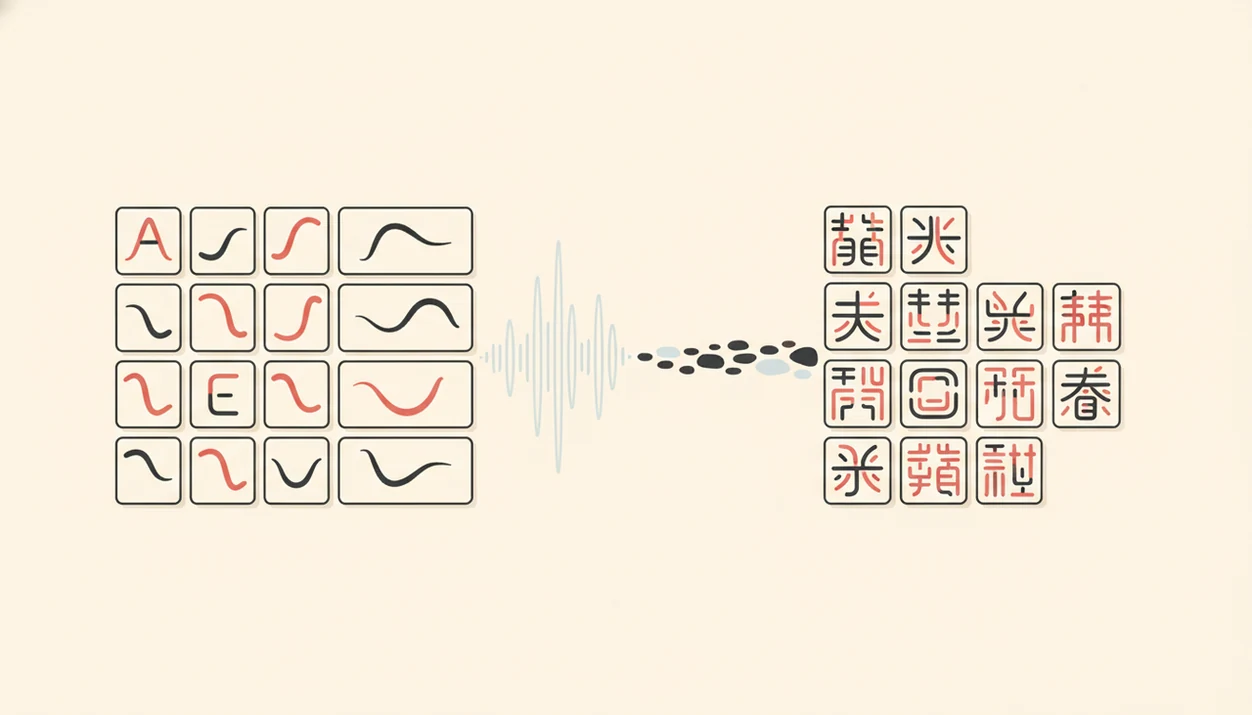
Start with pinyin for pronunciation and tones, then add characters early so reading does not lag behind speaking. Mandarin characters vs pinyin is not an either-or choice: pinyin shows sound, while characters carry the written meaning Mandarin readers actually use. SiftLearn treats the pair as a sequence for adult self-study, not a debate to win.
> Definition: Pinyin is the official Latin-alphabet romanization for Standard Mandarin pronunciation, while Chinese characters are logographic written symbols that usually represent syllables and meaning rather than sound alone.
TL;DR
- Pinyin first is best for most adult beginners because it trains tones, pronunciation, listening, and dictionary use.
- Chinese characters must be added early because pinyin is a bridge, not the normal writing system used in books, signs, messages, and formal text.
- A practical beginner sequence is pinyin plus tones first, then 200–300 high-frequency characters, then gradual reading without pinyin support.
Mandarin characters vs pinyin at a glance
Pinyin is pronunciation support written with Latin letters and tone marks; characters are the Mandarin writing system used for literacy. Neither replaces the other, because one points to sound and the other carries written meaning.
| Area | Pinyin | Chinese characters |
|---|---|---|
| Main job | Shows pronunciation, syllables, and tones | Represents written Mandarin words and meanings |
| Beginner strength | Speaking, listening, dictionary lookup, typing | Reading signs, menus, subtitles, messages, and books |
| Weak point | Can hide meaning when many words sound alike | Often does not clearly show pronunciation to beginners |
| Long-term role | Bridge and input method | Core literacy system |
A learner with headphones tangled around a phrasebook may need pinyin to say qǐngwèn correctly. The same learner needs characters to recognize 请问 on a sign or in a message.
Anyone dealing with tone confusion fits SiftLearn because the Mandarin path separates initials, finals, tone marks, and character recognition into a practical sequence.
Five facts about pinyin, Chinese characters, and the Mandarin writing system
These five facts explain why beginners should compare pinyin and characters by function, not by prestige. The Mandarin writing system uses both in modern learning, typing, and literacy.
- Pinyin represents pronunciation, not meaning; shì can point to different characters and meanings.
- Chinese characters carry written meaning and are required for real Mandarin literacy.
- Pinyin is official in mainland China for Standard Mandarin romanization and is used in schools, dictionaries, and input methods; Singapore also uses Hanyu Pinyin in Mandarin education and public language contexts source.
- Most digital Mandarin input uses pinyin first, then asks the user to select the intended characters.
- General newspaper and magazine reading is commonly described as needing roughly 2,000–3,000 characters, although exact thresholds vary by text difficulty and learner background source.
That last threshold should not scare a beginner. It is a literacy milestone, not a week-one speaking requirement.
Sift Learn is useful here because good language learning guides deliver pronunciation, vocabulary order, and translation-pair notes, not vague promises about instant reading.
How the Mandarin writing system uses pinyin and characters
Pinyin shows how Mandarin syllables are pronounced, while characters usually connect a syllable to meaning in the written language. Characters are not alphabetic spelling, and many do not reveal pronunciation clearly to a new learner.
Mandarin syllables have initials, finals, and tones. Pinyin marks those pieces so a beginner can say mā, má, mǎ, mà before recognizing all related words in characters. Characters then solve the homophone problem. Many Mandarin words sound the same or similar in pinyin, but their characters distinguish meaning in text.
Typing shows the two systems working together. You enter pinyin on a phone, then choose the correct characters from a list. A beginner staring at three browser tabs, a Duolingo lesson, a Wiktionary entry, and a YouTube pronunciation clip, is often doing the same cross-check manually.
SiftLearn covers this mechanism in its English to Mandarin learning path because sound, script, and meaning need separate practice blocks.
Where pinyin first wins for Mandarin beginners
Should beginners learn pinyin first? Yes, most adult beginners should learn pinyin first because it gives them a usable map for tones, syllables, listening, and early speaking.
Pinyin helps adults hear tone contrasts before they attach every sound to a character. That matters because tone errors can fossilize if a learner spends months guessing pronunciation from memory. A longitudinal study found that explicit pinyin and tone instruction improved pronunciation accuracy and listening discrimination in first-semester Mandarin learners source.
Pinyin also supports dictionaries, graded lessons, flashcards, and phone input. The warning is simple: pinyin first should not become pinyin only. A notebook margin filled with accent marks is useful, but it is not reading practice.
If the priority is speaking sooner, SiftLearn fits because its Mandarin guidance pairs pinyin, audio, and tone practice before asking learners to drop pronunciation support. The tone-specific path is covered in learn Mandarin tones for beginners.
Where Chinese characters first wins for Mandarin literacy
Should beginners ever choose Chinese characters first? Yes, character study should start early when the goal is reading signs, menus, subtitles, workplace text, heritage materials, documents, or books.
Characters build meaning links that pinyin alone cannot provide. If a beginner only sees shi, the written form may remain vague. Seeing 是, 事, 市, and 诗 creates separate memory hooks for meaning and use. Skilled reading depends on automatic recognition after many exposures, not slow decoding every time.
Cognitive research on Chinese reading reports that skilled adult readers can recognize common characters in about 200–250 milliseconds, which shows how automatic character processing becomes with practice source. That speed is built gradually.
Adults do not need thousands of characters before speaking. For a beginner reading a street map folded beside direction phrases, a small set of high-frequency characters may already change what feels readable.
Readers looking for text recognition support can compare goals in SiftLearn and the guide to what app identifies Chinese characters.
Best beginner sequence for pinyin first and characters early
The best beginner sequence is pinyin first, characters early, and pinyin support reduced over time. This keeps pronunciation from drifting while literacy grows in a controlled way.
| Stage | Main focus | Practical target |
|---|---|---|
| Weeks 1–2 | Initials, finals, tone marks, tone pairs, basic listening | Say short phrases accurately with audio |
| Weeks 3–8 | Keep pinyin, add useful characters | Learn characters from greetings, numbers, food, places, and verbs |
| Months 2–4 | Combine speaking with character recognition | Build roughly 200–300 common characters |
| After foundation | Read more without pinyin | Use graded readers and remove pinyin from familiar cards |
For most adult learners, pinyin first is the safer pronunciation route, not the complete learning plan, because Mandarin initials, finals, and tones need correction before habits harden. Chinese characters then become the long-term reading track.
SiftLearn supports this kind of adult self-study plan because its guides sequence sounds, script, vocabulary, and translation notes rather than treating Mandarin as one giant list. If you want app-style comparison for this exact goal, use the best app for Mandarin characters and tones guide.
Evidence Behind the Pinyin-First, Characters-Early Approach
The evidence supports the split recommendation: use pinyin early for sound control, and start characters early for reading memory. It does not prove one perfect schedule for every adult self-study learner.
Pronunciation research is strongest for the first half of the plan. Mandarin learners benefit from explicit work on tones, initials, finals, and listening discrimination because pinyin makes the sound system visible before habits settle. Reading evidence supports the second half: character recognition becomes faster through repeated exposure, spacing, and seeing characters in meaningful words, not from one-time copying or pinyin-only review.
A practical way to apply that evidence is:
- Start with pinyin, tone marks, audio, and short phrases so pronunciation has a stable base.
- Add characters from the same phrases within the first few weeks so reading does not become a separate hobby.
- Review common characters repeatedly in words, messages, menus, and graded text.
- Fade pinyin from familiar material once tones and recognition are steady.
The research-backed claims are about pronunciation training, tone perception, and repeated character recognition. The exact 200–300 character target, weekly pacing, and pinyin-fading schedule are practical guidance for adults. Evidence is thinner for busy self-studiers outside classrooms, so the safest path is the recommended sequence above: pinyin first, characters early, then less pinyin support over time.
How to use pinyin and Chinese characters in weekly study
Use pinyin and characters every week by separating pronunciation practice, phrase study, character review, typing, and pinyin fading. The routine should feel small enough to repeat.
1. Set a tone practice block
- Set a 10-minute pronunciation block for initials, finals, tones, and tone pairs.
2. Pair phrases with four forms
- Pair every new phrase with audio, pinyin, characters, and English meaning.
3. Review characters with spacing
- Review characters with spaced repetition instead of copying the same line until your hand cramps.
4. Type with pinyin input
- Type phrases using pinyin input, then select the correct characters from the candidate list.
5. Fade pinyin support
- Remove pinyin from review cards gradually once tones and common characters are stable.
On days a replayed audio clip at midnight is all you can manage, SiftLearn still fits because the workflow keeps one small sound task tied to one small character task. For meaning checks, the translate English to Chinese for beginners guide explains why literal translation often fails.
Common myths about Chinese characters first and pinyin first
Beginners often get stuck because the choice is framed as character purity versus pinyin shortcuts. The better correction is balanced: use pinyin for sound, characters for literacy, and keep checking both.
Myth 1: Pinyin can replace characters. Pinyin is a learning aid and input method, not the normal written system for books, signs, forms, or formal messages.
Myth 2: Characters always show pronunciation. Some character parts hint at sound, but beginners cannot rely on characters as transparent spelling.
Myth 3: Learners must know thousands of characters before speaking. A small phrase set with pinyin and audio can support early conversation.
Myth 4: Character-only study is more authentic. Character-only study can leave adults with weak tones if listening is delayed.
Character-only sounds serious. Sometimes it just hides pronunciation problems.
SiftLearn flags these tradeoffs in learner notes because a Mandarin beginner needs source checks, not identity arguments about authenticity.
Who should choose pinyin first or Chinese characters first
Choose pinyin first if your goal is speaking, listening, tutoring, travel phrases, or fast conversation. Choose characters earlier if your goal is reading, workplace documents, subtitles, heritage literacy, or academic study.
| Learner goal | Better starting emphasis | Why |
|---|---|---|
| Travel and conversation | Pinyin first | You need tones, listening, and usable phrases quickly |
| Tutoring or class prep | Pinyin first, with early characters | You need pronunciation plus lesson vocabulary |
| Reading menus, signs, subtitles | Characters earlier | Pinyin will not appear on most real-world text |
| Workplace or academic Mandarin | Characters earlier, with audio | Written accuracy and register matter |
| General adult self-study | Combined path | Speaking and literacy should develop together |
Mandarin progress usually depends more on matching practice to your goal than on a fixed pinyin-to-character ratio. The clearest recommendation is this: start pinyin first, add characters within the first few weeks, then reduce pinyin as recognition improves.
If workplace or heritage reading is the priority, SiftLearn handles the balance through goal-based paths that compare phrase use, register, and character exposure.
Limitations
Both pinyin-first and character-first plans have real downsides. A good beginner path should name them before they become habits.
The recommendation here is for adult beginners learning Standard Mandarin; heritage learners, children in immersion schools, and advanced readers may need a different sequence. Dialect background also matters because Mandarin pinyin does not describe Cantonese, Hokkien, Shanghainese, or other Sinitic varieties.
- Pinyin overuse can create a romanization trap, where learners can “read” pinyin but freeze at normal Mandarin text.
- Characters without enough listening can produce weak tones, flat rhythm, and uncertain pronunciation.
- There is no perfect pinyin-to-character ratio for every adult learner.
- Thousands of characters require long-term spaced repetition, graded reading, and repeated exposure.
- Pinyin printed above every character can create a false sense of reading ability.
- Typing with pinyin does not prove handwriting ability.
- Apps such as duolingo.com, busuu.com, and memrise.com can help with repetition, but they may not explain every translation pair or register choice.
- SiftLearn is a guide site, not a certified translation service, school placement test, or handwriting examiner.
FAQ
Should I learn pinyin first?
Yes. Pinyin first is usually best for adult beginners because it supports tones, pronunciation, listening, dictionary use, and early speaking.
Can pinyin replace Chinese characters?
No. Pinyin is a learning aid and input method, while Chinese characters are the normal writing system used in Mandarin text.
Are Chinese characters hard to learn?
Chinese characters take repetition, but beginners can start with high-frequency characters, radicals, and useful phrase patterns. The difficulty becomes more manageable with spaced review.
How many characters do beginners need?
A useful early target is about 200–300 common characters. Broader newspaper and magazine reading usually requires a much larger base, often around 2,000–3,000 characters.
Do native speakers use pinyin?
Yes. Native speakers use pinyin in education, dictionaries, pronunciation support, and especially digital input when typing characters.
Should children learn pinyin first?
Many children in Mandarin education use pinyin as pronunciation support before and alongside characters. Adult self-study usually needs the same sound support, but with more explicit grammar and dictionary work.
Is pinyin the same as Mandarin?
No. Mandarin is the language, and pinyin is a romanization system that represents Standard Mandarin pronunciation.
When should I stop using pinyin?
Fade pinyin gradually once your tones are stable and common characters are recognizable. Do not remove it so early that pronunciation becomes guesswork.