
Restart After a Language Learning Break Without Starting Over
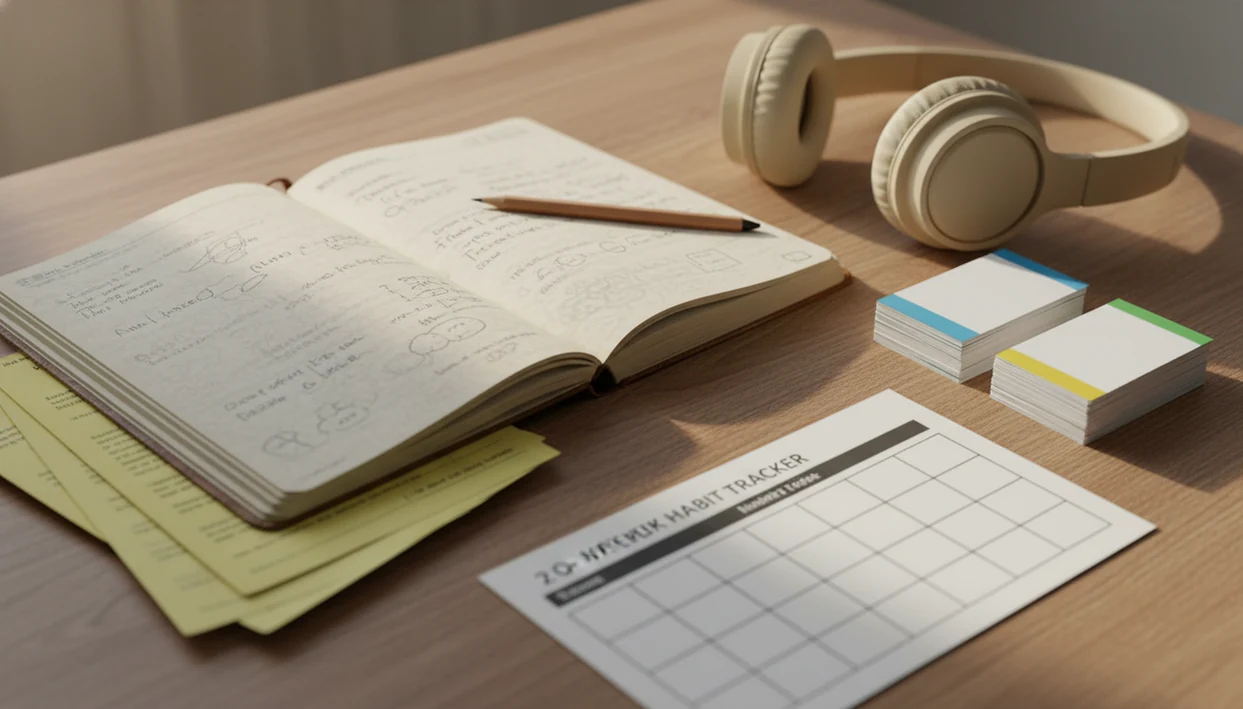
To restart after language learning break, audit what you still recognize, rebuild daily contact with short sessions, review only the highest-value vocabulary and grammar, then choose one simple routine for the next 14 days. You are usually reactivating dormant knowledge, not beginning from zero.
Definition: Restarting language study after a break means reactivating previously learned vocabulary, grammar, listening ability, and phrases through targeted review and low-pressure use instead of repeating every beginner lesson.
TL;DR
- Most lost language progress is not gone; relearning is often faster because older memory traces can reactivate.
- Begin with 10–15 minutes of daily listening, reading, vocabulary review, or phrase practice before rebuilding intensity.
- Use a targeted audit of old notes, apps, decks, and lessons so you review weak areas without duplicating work.
How Restarting Language Study Works in the Brain
Restarting language study works through reactivation, not simple repetition of beginner material. Reactivation means old vocabulary, grammar patterns, sounds, and phrases become easier to access again after renewed exposure.
Memory researchers call this the savings effect. In plain terms, relearning something once studied can take less effort than learning it for the first time because dormant memory traces remain. One memory study found relearning could be up to four times faster than initial learning, supported by long-term memory traces source.
Speaking may still feel slow. Recognition usually returns before active recall, so you might understand a podcast line before you can produce the same sentence. That gap is normal. A learner staring at a Duolingo lesson, a Wiktionary entry, and a YouTube pronunciation clip is often rebuilding access, not proving failure.
Five Facts About Lost Language Progress After a Break
Lost language progress is usually weakened access, not total erasure. The restart plan should treat your old study as material to test, sort, and reactivate.
- Most language knowledge after a break is weakened rather than erased, especially common vocabulary and familiar grammar.
- Vocabulary can fade quickly without review; in Ebbinghaus-style forgetting research, recall drops steeply after initial learning, with the exact rate depending on the material and test conditions source.
- Spaced review beats cramming for long-term vocabulary retention; second-language spacing research generally finds better delayed recall when reviews are distributed over time rather than massed into one session source.
- Light reading and listening still count because they rebuild automatic recognition through repeated contact.
- Basic vocabulary and grammar can remain stable for years, but details such as endings, gender, register, and word order may weaken.
The notebook tells the truth.
If your old pronoun chart is folded into a backpack, start there. Mark what still feels familiar before buying another course or deleting your old flashcards.
Language Learning Materials Audit Before You Restart
“What should I check before I restart language study?” Check your old notebooks, course units, app history, flashcards, saved phrase lists, and translation pairs before choosing new lessons.
Make three columns: recognize, shaky, and forgotten. Put each item where it honestly belongs. A sentence you can understand but not say belongs in shaky. A word you only know after seeing the English prompt belongs there too.
Prioritize useful nouns, common verbs, connectors, polite phrases, and grammar patterns tied to your goal. A traveler returning to Portuguese might keep airport phrases, food words, and directions before rare animal names. For a structured Portuguese path, the learn Portuguese for English speakers guide is a better next step than restarting every alphabet and greeting lesson.
Avoid a full beginner reset unless the audit shows major gaps. For most returning learners, targeted review is faster than repeating Unit 1.
How to Restart After a Language Learning Break in 6 Steps
Use a 14-day restart plan to rebuild contact, test recognition, and add one small output task. For returning learners, a short reactivation window is often easier than a large promise because it creates evidence before motivation fades.
The order matters: test recognition first, review only shaky material second, then add small output once the language feels familiar again. That sequence avoids wasting the first week on lessons you can already understand.
1. Set a 14-day restart goal
Set one clear goal, such as “review 80 restaurant and travel phrases” or “finish 10 easy dialogues.”
2. Test what you still recognize
Read old notes, app lessons, and phrase lists before speaking. Recognition is the first useful signal.
3. Build a reactivation deck
Add only shaky, useful items. Include words from old mistakes, not every word you once studied.
4. Review core grammar patterns
Review sentence frames, verb forms, pronouns, question patterns, and negation before rare exceptions.
5. Add daily listening or reading
Use 5–10 minutes of easy audio, captions, graded reading, or lesson dialogue.
6. Use one sentence in real life
Write a text, record a voice note, or say one line aloud. Mouth dry before a new sound. Still counts.
Evidence Behind the 14-Day Restart Plan
The 14-day restart plan works because it separates recognition, review, input, and output instead of forcing everything at once. It follows a simple memory pattern: check what still wakes up, then practice what still sticks.
- Test recognition first. Start with reading and listening checks because passive access usually returns before speaking. Ebbinghaus’s forgetting work and later relearning research both support the idea that old material can become accessible again with the right cue.
- Review shaky items in short sessions. Put only useful, half-remembered words and patterns into the reactivation deck. Spacing researchers such as Cepeda and colleagues have shown that distributed practice helps delayed recall more than one tired cram.
- Use easy input daily. Choose audio and reading that feel almost too easy. Familiar material rebuilds confidence because your brain can match sound, spelling, and meaning without fighting every sentence.
- Add output on purpose. Recognition is not speaking accuracy. You still need short voice notes, written sentences, tutor correction, or real conversation to rebuild pronunciation, word order, and timing.
Vocabulary Reactivation Deck for Restarting Language Study
A vocabulary reactivation deck should contain 50–100 high-value items from your old material, not an entire copied course. Start with old mistakes, useful nouns, common verbs, connectors, survival phrases, and sentence chunks.
Use spaced repetition instead of one long cram session. A 12-minute review on Monday, Wednesday, and Saturday usually gives better recall than a single hour that leaves you tired. Include translation-pair prompts in both directions when useful: English to target language, then target language to English. That catches false confidence.
For Portuguese learners, a small deck might mix menu words, family phrases, and common verbs. If your restart goal is comprehension, Portuguese to English vocabulary practice fits better than forcing production too early.
Use SiftLearn or another structured guide as a map for vocabulary, grammar, practical phrases, and translation-pair review; avoid any resource that promises instant fluency without output practice.
Listening and Reading Routine to Return to Language Learning
Listening and reading help you return to language learning by rebuilding automatic recognition. Start with familiar, easy input before native-speed news, unscripted podcasts, or dense novels.
Use 5–10 minutes a day: a lesson dialogue, graded reader page, captioned video, slow podcast, or saved phrase list. Easy contact lets your brain match sound, spelling, and meaning without panic. A tablet screen glowing with subtitles can be more useful than a heroic hour with material you barely understand.
Reading also supports incidental vocabulary growth. One review found reading alone can produce gains of 5–15% of unknown words encountered in a text, especially with repeated exposure source.
Tools like SiftLearn, Duolingo, Babbel, and Busuu can support this stage when you use them as source checks and routines, not as proof that you studied “enough.”
Common Myths About Restarting Language Study
Restart success is consistency plus targeted review, not punishment for taking a break. The goal is to narrow weak points and rebuild contact.
| Myth | Better restart frame |
|---|---|
| A long break means starting from zero. | Audit first; much of your old recognition may return quickly. |
| Serious learners must study for hours daily. | Ten focused minutes can restart the habit before intensity increases. |
| Slow speaking recall means old study was wasted. | Recognition often returns before active production. |
| Apps, podcasts, and light reading do not count. | They count when tied to review, listening, or phrase practice. |
| Restarting means choosing a new method immediately. | Old notes and decks may show the shortest path forward. |
If you are choosing between resources, compare what each tool trains. For example, a best Portuguese learning app for English speakers comparison should distinguish vocabulary review, grammar sequencing, pronunciation, and real output.
14-Day Progress Check for Lost Language Progress
After 14 days, retest the original audit list instead of asking whether you “feel fluent.” Track recognition, recall, listening comfort, and sentence output.
Use four simple checks. First, reread 30 old words and count how many you recognize instantly. Second, cover the translations and produce as many as possible. Third, replay an easy dialogue and note whether it feels slower. Fourth, write a short paragraph, record a voice note, or have a mini conversation.
The evidence can be small. A restaurant menu word circled in pencil, then remembered two days later, is progress you can verify.
Adjust the next routine based on the weakest skill. If recognition improved but speech froze, add sentence frames. If listening stayed foggy, use easier audio. For pronunciation-heavy restarts, such as Mandarin, a best app for Mandarin characters and tones comparison may help you choose focused practice.
Limitations
Reactivation is useful, but it does not solve every restart problem. Some gaps require full relearning, outside feedback, or a different study routine.
- Very long breaks may require relearning low-frequency vocabulary, especially words never used outside lessons.
- Detailed grammar may be weaker than basic recognition, including endings, gender rules, cases, tones, or formality.
- Speaking fluency needs interaction; apps and flashcards cannot fully replace conversation, correction, and timing.
- Sporadic practice will not rebuild momentum, even with a strong reactivation deck.
- Some learners skip too much review and create confidence gaps when harder material returns.
- Tools work best when tied to a goal such as work, conversation, reading, family communication, or travel.
- Dialect choice can matter; Portuguese learners may need to settle the Brazilian vs European Portuguese question before rebuilding phrase habits.
Sift Learn may help as a map for vocabulary, grammar, and translation-pair review, but no guide can verify your speaking accuracy the way a tutor or native speaker can.
FAQ
Did I lose my language skills during the break?
Most learners have weakened access, not total loss. Recognition often returns before active recall.
Should I start from zero after a long language learning break?
Use an audit before repeating beginner material. Restart from zero only if core vocabulary, grammar, and listening are mostly forgotten.
How long should I study each day when restarting a language?
Start with 10–15 minutes a day for two weeks. Increase time only after the routine feels stable.
What should I review first after a language learning break?
Review core vocabulary, common grammar patterns, and practical phrases first. Low-frequency words can wait.
Do language learning apps still help after a break?
Yes, apps can help when used for structured review, spaced repetition, and short daily contact. SiftLearn can be one reference point for adult self-study planning.
Why is speaking still hard even when I recognize words?
Recognition is passive access, while speaking requires active recall, pronunciation, word order, and timing. Active recall usually needs separate practice.
Can listening practice rebuild my language fluency?
Listening practice supports fluency by rebuilding comprehension and sound recognition. It still needs writing or speaking practice for output.
How do I stay motivated when restarting language study?
Use small wins, visible tracking, and one realistic routine for 14 days. SiftLearn and similar guides are most useful when they support that routine rather than replace it.