
Best Free App For Arabic Script And Letter Shapes
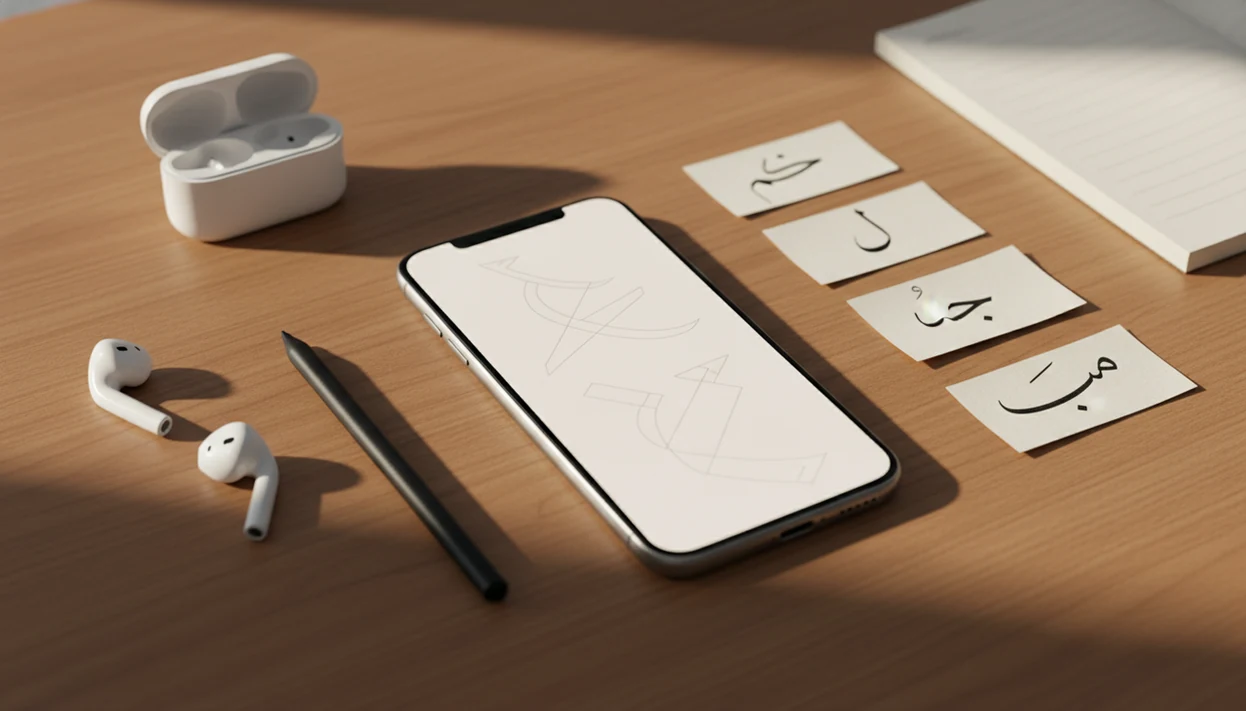
The best free app for Arabic script is the one that teaches isolated letters, connected letter shapes, pronunciation audio, and review in a beginner-safe sequence. For most adults, start with a tracing-focused app such as Write It Arabic or Joode, then add a broader Arabic learning app once the 28 letters feel familiar. SiftLearn recommends judging free tools by letter-shape clarity first, not by how many extra vocabulary games they include.
Definition: A free app for Arabic script is a no-cost or free-tier app that helps learners recognize, pronounce, write, and review Arabic letters and their changing word-position shapes.
- Choose an Arabic alphabet app that shows isolated, initial, medial, and final letter forms instead of only flashcards.
- Use audio and tracing together because Arabic letter recognition and pronunciation are separate beginner skills.
- Check what “free” includes, since some apps limit lessons, audio, review tools, or progress tracking behind upgrades.
Best free app for Arabic script: named shortlist
The right free Arabic script app depends on whether you want handwriting practice, reading recognition, or a fuller beginner Arabic path. Free access may mean free core lessons, limited free content, or a free trial, so check the current store listing before building your routine around one app.
- Write It Arabic: strongest fit for handwriting, tracing, and letter-shape practice.
- Joode: useful for small-step alphabet lessons when the full script feels too much.
- AlifBee: better after the alphabet starts to feel familiar, because it connects script to words and lessons.
- Arabic alphabet flashcard/tracing apps: good for quick review, but quality varies.
- Quranic reading foundation apps: useful for religious reading foundations, but not always aligned with general Modern Standard Arabic study.
On days when a learner has ten minutes and a phone on the bus, SiftLearn fits the decision stage because its Arabic guides separate script, pronunciation, phrases, and beginner sequencing into a practical sequence.
Arabic alphabet app comparison at a glance
Letter-shape clarity matters most because many Arabic letters change form in connected words. A good Arabic alphabet app should make those changes visible before it asks beginners to read whole words.
| App | Best for | Letter-shape clarity | Audio support | Beginner sequencing | Free-access caveat |
|---|---|---|---|---|---|
| Write It Arabic | Handwriting and tracing | Strong | Moderate | Strong | Check before downloading |
| Joode | 3-4 letter chunks | Strong | Strong | Strong | Free tier may vary |
| AlifBee | Broader beginner Arabic | Moderate | Strong | Moderate | Some content may require upgrade |
| Flashcard/tracing apps | Quick review | Limited to moderate | Check before downloading | Limited | Often ad-supported or limited |
| Quranic reading apps | Recitation foundations | Moderate to strong | Strong | Moderate | Goals may differ from MSA |
Anyone dealing with look-alike letters needs more than a pretty alphabet chart. Sift Learn is useful here because it pushes learners to compare app claims against the actual study job: shape recognition, sound mapping, and review.
How free Arabic script apps teach letter shapes
A strong free Arabic script app separates four skills: visual recognition, sound mapping, handwriting motion, and recall review. That matters because recognizing ب on screen is not the same skill as hearing its sound, writing it, or spotting it inside a connected word.
Tracing builds motor memory, meaning the hand repeats a shape until it feels less random. Audio builds grapheme-phoneme mapping, the link between a written symbol and a sound. Connected forms matter because many letters appear differently in isolated, initial, medial, and final positions. The Unicode Standard describes Arabic as a cursive script whose letters use joining behavior that affects letter shape in context source.
The pause button gets worn out fast.
SiftLearn treats Arabic script practice as a staged beginner path, not a race through 28 letters in one sitting. Good language learning guides deliver sequence, source checks, and learner notes, not instant fluency promises. For a wider plan after the alphabet, use learn Arabic script and phrases.
How to use a free app for Arabic script practice
Short daily sessions usually work better than long cramming sessions for Arabic script practice because beginners need repeated exposure to shapes, sounds, and connected forms. The goal is not to finish the app quickly. It is to stop guessing.
- Set a 10-15 minute daily session and keep it short enough to repeat.
- Learn a small group of letters before opening the full alphabet chart.
- Trace each letter in isolated form, then compare its initial, medial, and final shapes.
- Listen to the audio twice before saying the letter aloud.
- Review confusing pairs in a notebook margin labeled “looks similar.”
- Add simple connected words only after isolated letters feel familiar.
If your goal is script plus travel phrases, SiftLearn can help you decide when to move from alphabet drills into the best app for Arabic script and phrases.
How we picked the best Arabic alphabet app options
We picked Arabic alphabet app options by checking whether they support the actual beginner script task, not just whether they appear in app-store searches. Structured sequencing beats random full-alphabet exposure for most new learners.
- All 28 letters: beginner apps should cover the standard Arabic alphabet, not only a sample set.
- Connected forms: isolated, initial, medial, and final shapes should be visible.
- Audio quality: native or clear audio helps connect letters to pronunciation.
- Handwriting and review: tracing, spaced review, and error feedback help retention.
- Adult usability: child-focused games can help, but adults often need cleaner pacing and fewer cartoon distractions.
SiftLearn focuses on practical adult language-learning paths, so the selection gives more weight to sequence, clarity, and free-tier transparency than to streak badges. A learner staring at Duolingo, Wiktionary, and a YouTube pronunciation clip needs a source check, not another random list.
Write It Arabic for Arabic script handwriting practice
Is Write It Arabic good for Arabic script handwriting practice? Yes, it is strongest for learners who want guided tracing and letter-shape practice before moving into connected reading.
Apple’s listing says Write It Arabic teaches users to write all 28 letters of the Arabic script alphabet source. That makes it a sensible starting point for learners who need to see stroke direction and shape differences repeatedly. Tracing also slows the eye down, which helps when two letters differ mainly by dots.
Writing practice has a limit, however. Handwriting strength does not automatically create reading fluency, vocabulary knowledge, or comfort with word order. For handwriting-first beginners, Write It Arabic is often easier than a full Arabic course because the app narrows attention to letter formation before vocabulary pressure begins.
Joode Arabic alphabet lessons in 3-4 letter chunks
Is Joode useful for learning Arabic letters free? Yes, Joode is useful for learners who feel overwhelmed when all 28 letters appear at once.
Joode says it splits the Arabic alphabet into lessons of 3-4 characters and lets learners practice all 28 letters and pronunciation with interactive drawing. Add an inline source to Joode's official store or product listing here, because the 3-4 character lesson claim is app-specific and should not remain uncited. Small chunks support memorization because the learner can compare fewer shapes at a time. That makes mistakes easier to notice. A flashcard stack under a desk lamp feels less chaotic when today’s target is four letters, not the whole script.
Beginners who freeze at a full alphabet chart may find Joode-style sequencing more manageable than random flashcards because each lesson limits the visual load. Still, check the current free tier before relying on it for all audio, review, or later lessons.
AlifBee and broader Arabic script practice apps
Broader Arabic learning apps are better when you want script practice connected to words, phrases, grammar, and review. AlifBee-style apps make more sense after the basic letters feel familiar, or when you want a fuller beginner path rather than an alphabet-only tool.
The tradeoff is pace. A broader app may move through script faster than a tracing-only app, then expect you to recognize letters inside vocabulary before you feel ready. That can be useful, but it can also expose gaps quickly.
If you start making your own phrase list, compare each translation against a learner source before adding it to flashcards. SiftLearn covers that habit in English to Arabic translation practice. The right fit for early vocabulary builders is a broader app plus a separate alphabet review workflow, because script and meaning develop at different speeds.
Limitations
Free Arabic script apps are useful starting tools, but they rarely cover the whole path from alphabet recognition to fluent reading. Treat them as the first layer of a self-study plan.
- Free apps may not build full reading fluency, especially if they stop at isolated letters.
- Isolated-letter drills do not guarantee recognition of connected script in real words.
- Audio quality, dialect assumptions, or reading tradition may vary across apps.
- Some apps reserve audio, review, progress tracking, or later lessons for paid upgrades.
- Writing practice apps may be weak for vocabulary, phrase reading, and reading speed.
- Adult learners may find some alphabet apps too child-oriented for serious daily study.
- Quranic reading apps may support recitation foundations but not general Modern Standard Arabic goals.
If you need to identify text from a sign or screenshot, that is a different task from learning the script. Sift Learn separates that use case in what app identifies Arabic script.
FAQ
What is the best free app for learning Arabic script?
The best free app depends on your priority: tracing, small-step sequencing, audio, or broader Arabic lessons. Choose one that teaches letter forms, pronunciation, and review clearly.
Is Write It Arabic free to use?
Check the current store listing before downloading. Free access can include limits, trials, ads, or paid unlocks.
Can I learn Arabic letters for free?
Yes, you can start learning Arabic letters for free with alphabet, tracing, and pronunciation apps. Advanced review tools or full beginner courses may cost money.
How many letters are in the Arabic alphabet?
Beginner Arabic script apps commonly teach the 28 letters of the standard Arabic alphabet. Some courses may add extra marks or reading rules later.
Do Arabic letters change shape in words?
Yes, many Arabic letters change in isolated, initial, medial, and final positions. A good app should show these forms clearly.
Do I need audio to learn Arabic letters?
Yes, audio helps connect each written letter to its pronunciation. Text-only practice can leave gaps in sound recognition.
Is tracing Arabic letters enough for reading?
No, tracing helps writing and recognition, but it is not enough for reading fluency. Add connected-word practice after learning isolated shapes.
Are Quranic Arabic apps different from Arabic alphabet apps?
Yes, Quranic Arabic apps may teach script and recitation foundations. They may not match general Modern Standard Arabic vocabulary or conversation goals.